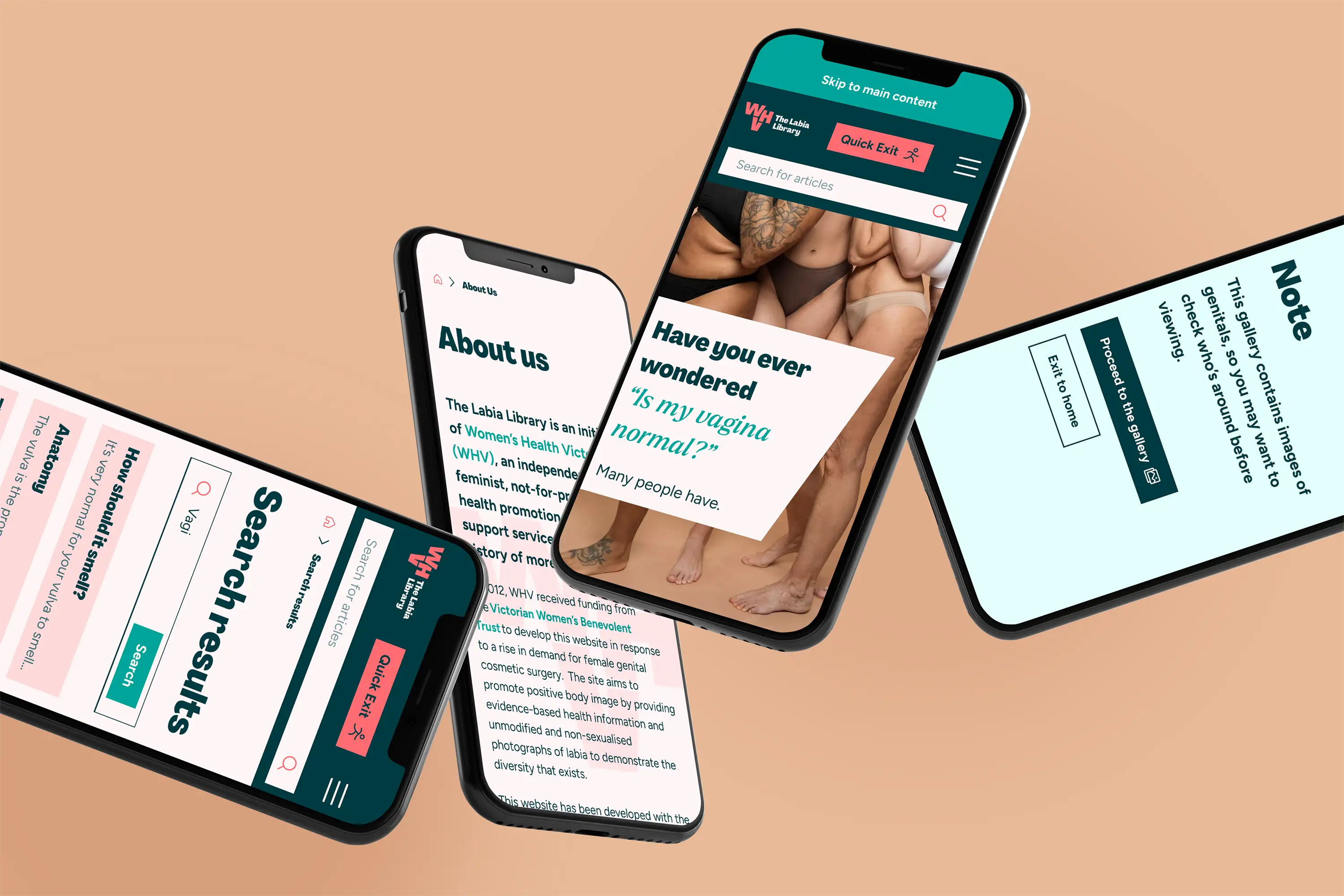
A website redesign for one of the few online resources using real photographs of vulvas to normalise body diversity.
Women's Health Victoria is a Victorian not-for-profit organisation with a mission to increase gender equity in health.
The Labia Library is one of their flagship initiatives, offering real-life images of vulvas alongside evidence-based information to help people feel less alone about their bodies and less likely to turn to surgery which can cause additional complications.
The existing site was outdated, not mobile-friendly, and no longer reflected the refreshed WHV brand.
Here's what we set out to achieve with this site redesign:
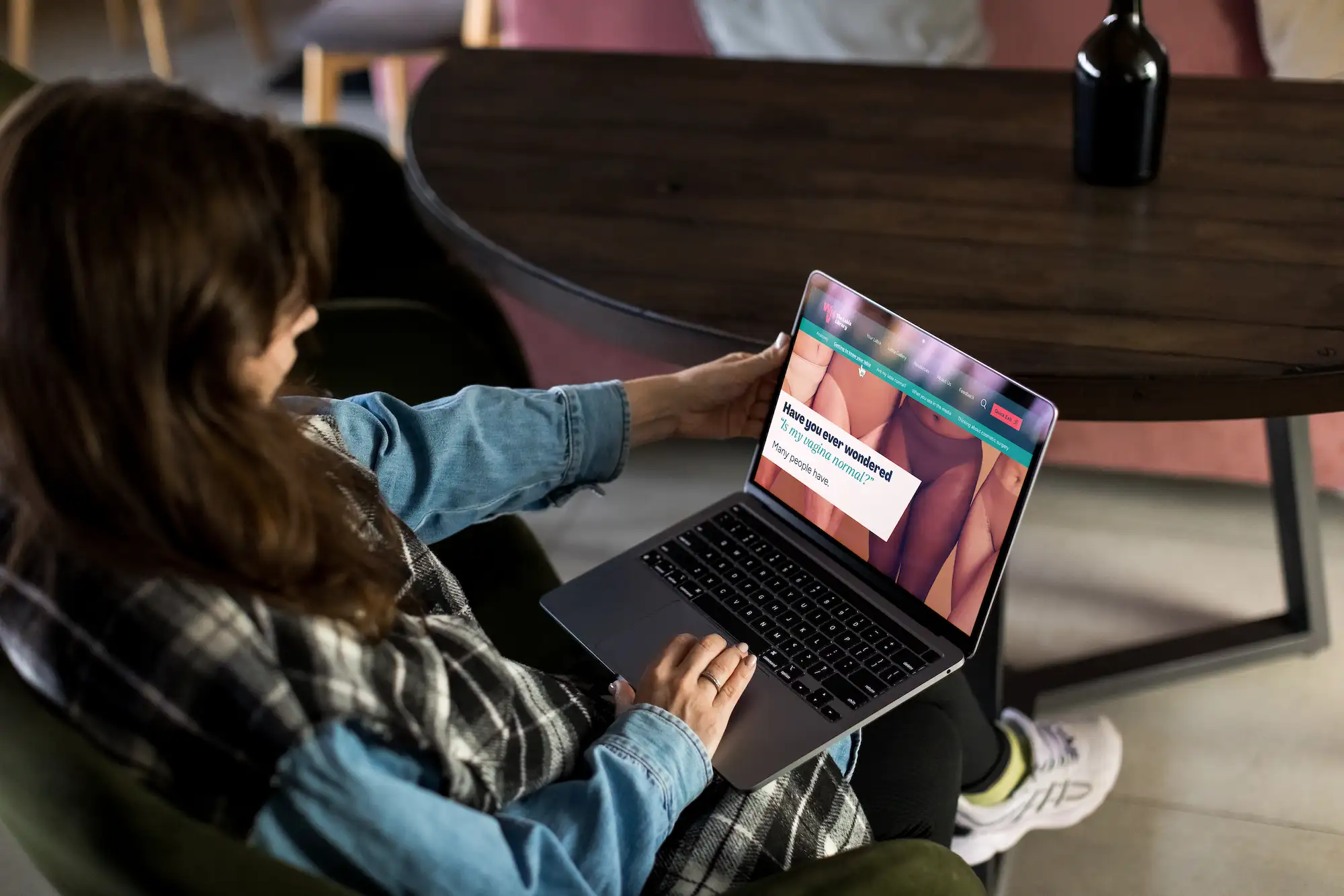
Designing for sensitive topics like women's health and disability is close to my heart. These sites are often visited during someone's hardest moments. Making them easy to use and genuinely accessible to people of all abilities is some of the most meaningful work I do. I'd love to help more of these organisations improve their branding and websites so they can continue to do their great work.
The project started with an audit of the existing site and a series of workshops with the WHV team to shape the content and navigation structure. This gave us a clear picture of what was working, what wasn't, and what the new site needed to do.
From there, I built a full set of Figma designs ready for the development team to take and run with. The handover documentation covered accessibility annotations, interactions, and responsiveness across breakpoints, so nothing was left to interpretation.
Accessibility was a priority from the beginning, not just because I was engaged but the whole team was invested in the success of the accessibility of the site.
The designs comply with WCAG 2.2 throughout: contrast-friendly colours, a skip to main content button, and a correct heading structure for screen reader navigation. There are approximately 50 images in the Labia gallery, each with descriptive alternative text. WHV and the development team carried accessibility from the provided designs and annotations through to production carefully, and it shows.
The Labia gallery also required a considered UX, as while the images are important they can be confronting if you're not actively choosing to visit it. Visitors see a content warning before entering, putting them in control of when and how they engage with the images. During the design process, we worked out a privacy-conscious workflow: I used placeholder images throughout so the actual photographs didn't need to be shared unnecessarily. The development team received them only when needed for production.
For a site people often visit in private, during difficult or uncertain moments, getting the accessibility, privacy and user experience was a key area of concern.
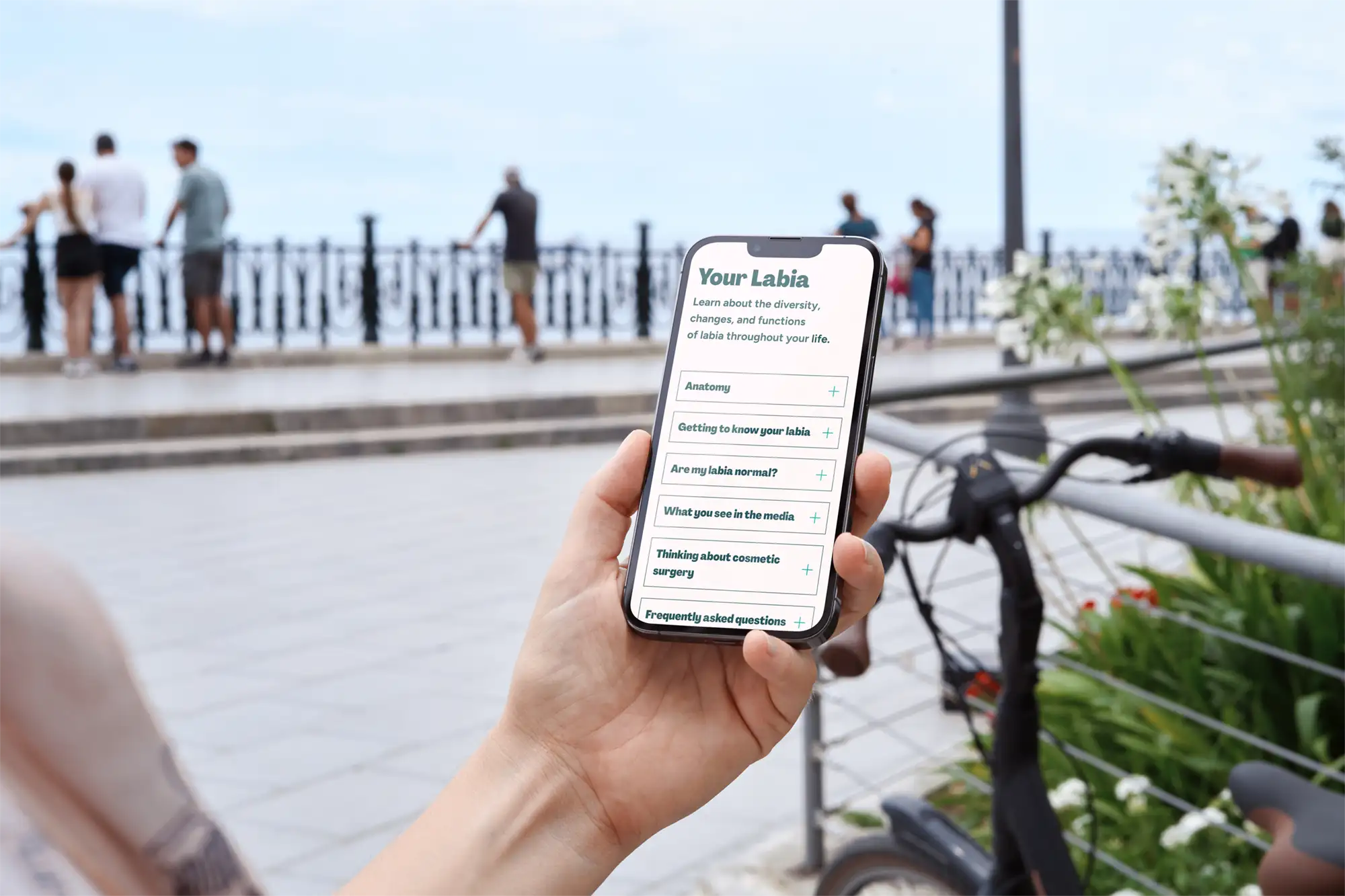
The Labia Library remains one of the first resources of its kind in the world, and its reach reflects that. The site continues to serve a large international audience as a trusted, affirming destination for people seeking credible information about vulval health.
The Figma designs were handed to the Women's Health Victoria team with documentation across all breakpoints.
A huge thanks to Tali Kalman, Charlotte Strong, Kate Johnston-Ataata, and Sianan Healy from Women's Health Victoria for their collaboration throughout.
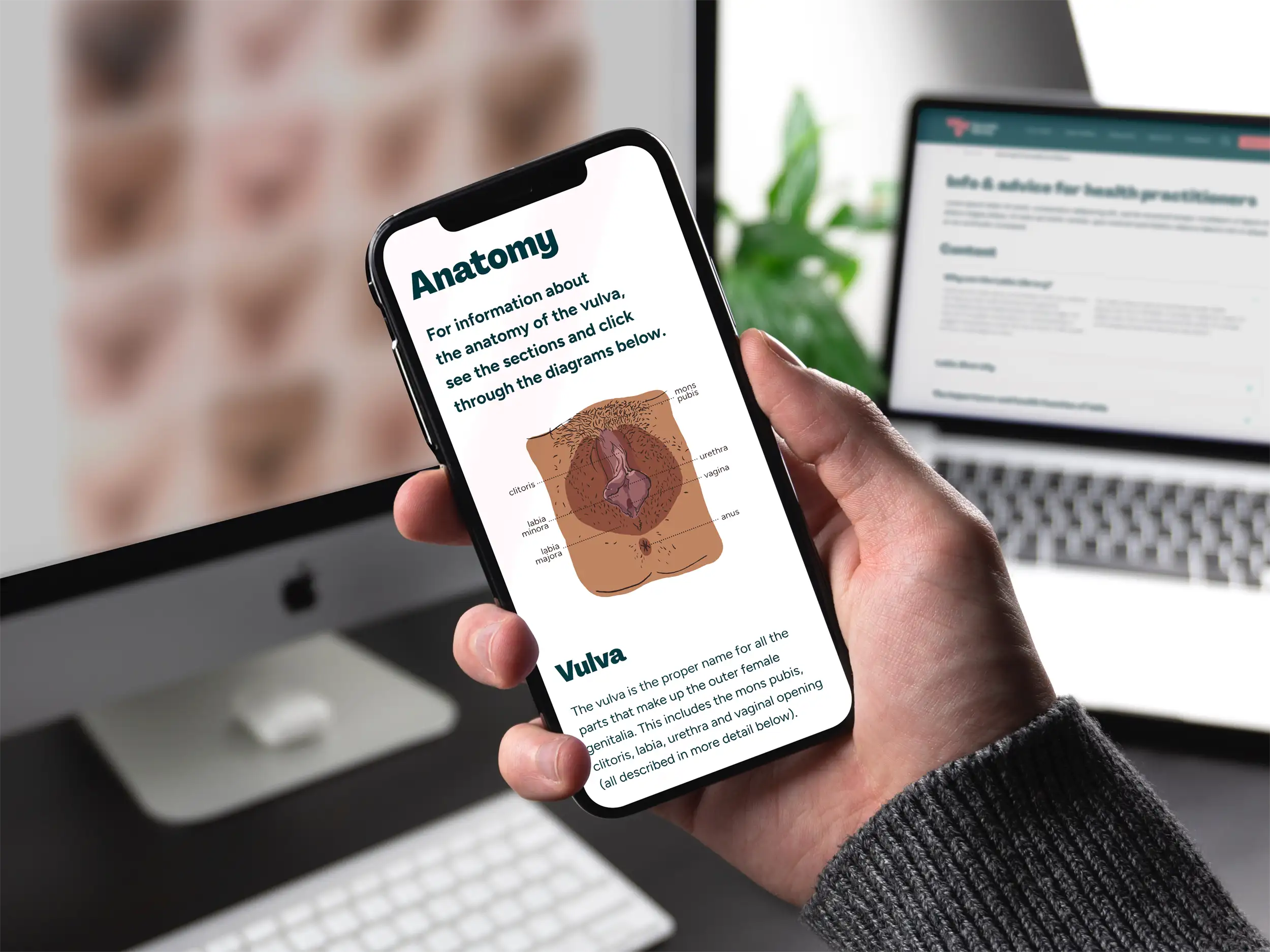
Photography for the Labia gallery by Breeana Dunbar and Katie Huisman, and anatomy diagrams illustrated by Emily Dang.
If your organisation is ready to improve its website or brand so more people can actually use it, I'd love to hear from you. Whether you're starting from scratch or working with what you've got, let's make it more accessible together.
