
No items found.
It did surprise me. The team there were so passionate and lovely, and working with them was genuinely a dream job. I spent a year trying to convince them to hire me, and then worked there for three years. One of the longest stints I've had in design with some of the coolest projects I’ve ever worked on.
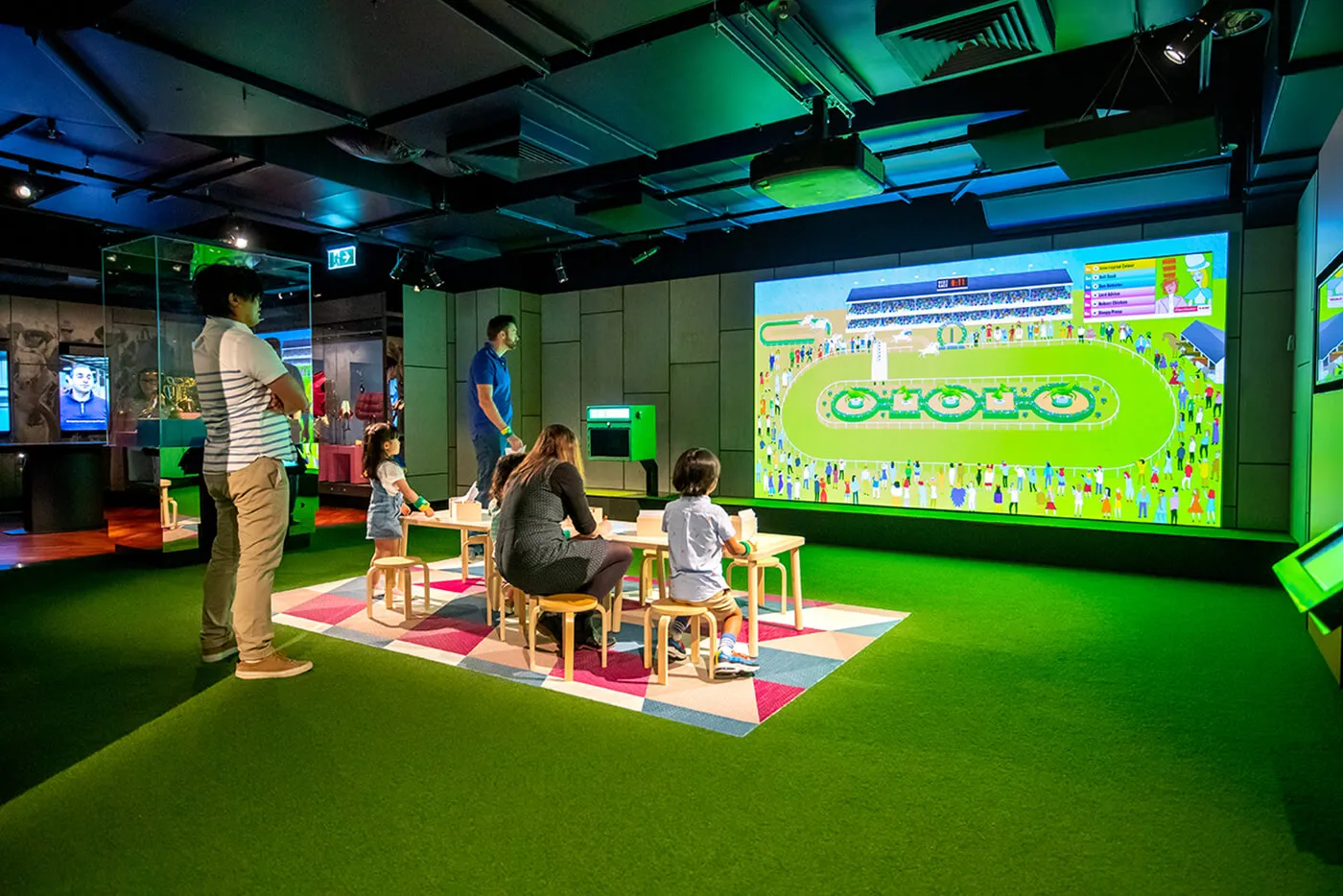
Sandpit built interactive, large-format experiences for some of Australia's most significant cultural institutions. Melbourne Zoo. The State Library of Victoria. The Australian Sports Museum. The National Portrait Gallery. The list goes on. These weren't small projects. They were beloved, technically complex pieces that people still encounter when they walk through those spaces today.
I credit my prior employers clearly in my portfolio because I think it's important to be honest about what I did and who I did it with. A team made those installations. I was part of that team. So this week I went to the Sandpit website to get the details of a prior project not on my site.
It was down.
I was and still am shocked the website is gone. Not because I need it for my own portfolio, but because those installations deserve a record. The institutions they were built for are still standing. The work is still physically present in some of them. Where it isn't, the absence makes documentation even more crucial. The studio behind them? Digitally, it's like they never existed.
There's something else worth noting here. So much agency work never sees the light of day. NDAs, client confidentiality, work that simply can't be shared publicly. The things we can talk about openly feel genuinely rare. Which makes the loss of a public record even harder to sit with. Sandpit's work lived in public institutions. It was visible, documented, celebrated. And now the studio's own account of it is gone.
This isn't a rare situation. It's quite common.
When a business closes, the website is often one of the first things to go. Domain renewals get missed. Hosting lapses. And with it goes the public record: the work, the team, the thinking, the story of what that organisation actually did.
For most businesses, that's an unfortunate loss. For studios whose entire output was experiential, physical, or interactive, it's something more than that. It's an erasure of context. Anyone trying to understand the history of interactive design in Australia loses a reference point. Students, researchers, future collaborators, journalists. Gone.
This isn't just a sentimental argument. There's a broader conversation happening right now about what we owe to digital work as a culture. And the more of it we create, the more precarious the record becomes.
In the UK, a consumer movement called Stop Killing Games has been pushing legislators to prevent publishers from remotely disabling games that people have already purchased. There are over one million supporters, with ongoing legal disputes as recent as early June 2026.
Supporters of the movement argue that where a game has no commercial future, studios should be obligated to preserve assets for cultural history, as well as honour the purchase consumers made. The parallel to silent film is worth sitting with here. When studios in the early 20th century were done with films, many destroyed them to recover the silver from the reels. Most of the silent film era is now gone forever. Nobody thought it mattered at the time.
This is the same argument, applied to interactive digital work. And the website of a studio that no longer exists is a much simpler preservation problem than keeping a live-service game playable. It's a static record. It costs relatively little to keep running. The decision to let it lapse is almost always a passive one, not a deliberate choice.
Total cloud storage is expected to exceed 200 zettabytes by the end of 2026. One zettabyte is one billion terabytes. We are creating, storing, and accumulating data at a scale that is genuinely hard to comprehend.
The infrastructure needed to hold all of this is growing just as fast. The global cloud storage market was valued at USD $118.6 billion in 2024, and is projected to reach $483.4 billion by 2032. AI is accelerating that growth further, increasing demand for data centres (already at over 9,000 centres) and the energy required to run them.
And yet, in the middle of all this accumulation, specific and meaningful things disappear. Not because storage is too expensive. Because nobody remembered to renew a domain.
The scale of what we're storing and what we're losing are both enormous, and they're not in conflict with each other. They're just not the same things.
Digital preservation gets even more complicated when you factor in the physical.
Take a VR experience. It's built to run on a specific headset. That headset gets discontinued. The file might still exist somewhere. But the thing that makes the experience actually work, the hardware itself, is no longer in production. So now you have an archival problem that isn't just about storage. It's about obsolescence.
How do you preserve a piece of interactive work that requires a physical object to function? Museum collections grapple with this constantly. Early digital artworks that ran on hardware nobody manufactures anymore. Interactive installations tied to proprietary systems. A VR experience designed in 2018 that, in twenty years, may be as inaccessible as a Laserdisc.
These aren't rhetorical questions. They're real problems that archivists, cultural institutions, and studios are sitting with, and mostly not solving. The honest answer is that there is no clean answer. File formats change. Mediums to play things on change. And the further we get from the moment something was made, the harder and more expensive it becomes to reconstruct the conditions that made it work.
Without physical media, we are entirely at the mercy of organisations that don't have archiving as a priority. Club Penguin had 200 million registered accounts at its peak. It also ran on Adobe Flash. When Flash lost browser support in 2020, it took a significant chunk of the early internet with it overnight. Not just Club Penguin. Thousands of games, interactive experiences, and creative tools that were a genuine part of people's childhoods. Some have been rebuilt. Most haven't. Disney shut down Club Penguin's fan-run reboots through copyright claims anyway, and what remains are unofficial servers with no safety moderation. That's the gap between a company moving on and anyone actually stewarding what they leave behind.
As we keep adapting to new technology, we leave things behind. The question worth sitting with is whether we're okay with that. More on that in part two.
Half joking, but fully serious.
My website should not lapse for at least two years after I die. The work I've done, the clients I've worked with, the things I've written. I want those to have a grace period where someone can still find them.
It sounds narcissistic. It might be. But I also think it reflects something worth naming: the people who build things for others rarely think about how the record of that work lives on. Clients move on. Institutions rebrand. Studios close. And the designer who spent months on something that still lives in a museum in Perth? Often the only person who cared to document it was them.
So document it. Keep the receipts. And if you run a studio, a practice, or a business: please set a calendar reminder for your domain renewal.
Some things are worth preserving on purpose.
This is part one of two. Part two looks at what happens when the systems we rely on to keep the record start disappearing too, from streaming platforms pulling content without warning, to major news sites blocking the only tool that was quietly archiving the internet for all of us.
Spend a day with me focused on your most important brand or website updates. Together we’ll turn your ideas into action and finish what’s been waiting on your list.
